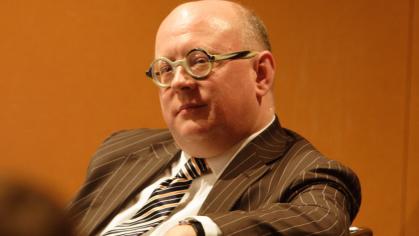
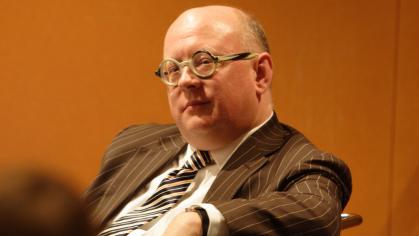
The Zimmerli celebrates the life and achievements of its late director Thomas Sokolowski, an activist and arts leader since the early 1980s. The date also marks the annual observation of Day With(out) Art/World AIDS Day.
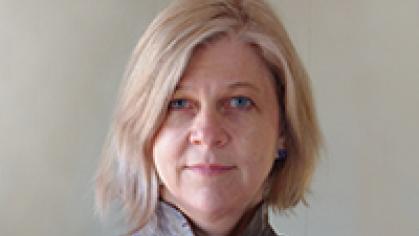
Donna Gustafson has been appointed interim director, as she continues to serve in other leadership roles at the museum.
eMuseum provides online visitors access to search more than 7,000 images of artwork in the institution’s collection. Museum staff continue to upload images weekly to increase access.
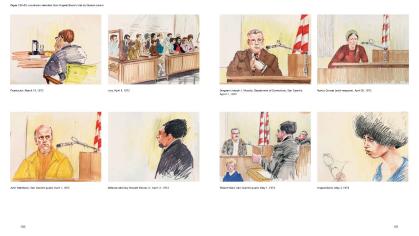
The Zimmerli is pleased to be a recipient of a $50,000 grant from The Andy Warhol Foundation for the Visual Arts to support the exhibition Angela Davis—Seize the Time. It is the first time the museum has received a grant from the funder.
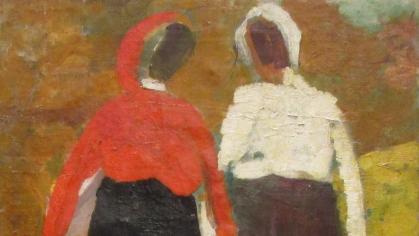
The Zimmerli is pleased to exhibit the oil painting Two Peasant Women (1928-30) by Kazimir Malevich, a loan from the Moscow-based cultural project Encyclopedia of the Russian Avant-Garde, through May 17, 2020.
A new exhibition invites visitors to delve into one of the hallmarks of unofficial Soviet art from the height of the Cold War. Dialogues – Ilya Kabakov and Viktor Pivovarov: Stories About Ourselves focuses on the two artists’ work created in the format of the album: an innovative genre of visual art popularized in the 1970s by conceptual artists in Moscow.
For more than 30 years, artist Vladimir Radunsky created children’s books, combining creative narration, innovative design, and pervasive wit. The Zimmerli Art Museum at Rutgers is pleased to spotlight his career in A Celebration of the Children’s Books of Vladimir Radunsky.
Intimate Details: Prints by James Tissot celebrates the Zimmerli Art Museum’s recent acquisition of several exquisite etchings by this noted chronicler of both Belle-Epoque Paris and Victorian London. Even as artists increasingly focused on depicting aspects of contemporary life during the late 19th century, Tissot's careful attention to portraying the most current fashions, furnishings, and social activities in his paintings stood out.
The Zimmerli delves into its permanent collections to explore pivotal developments and trends in art with the exhibitions Women Artists on the Leading Edge: Celebrating Douglass College at 100 and Recent Acquisitions in Photography.
National Endowment for the Arts Acting Chairman Mary Anne Carter has approved more than $80 million in grants as part of the Arts Endowment’s second major funding announcement for fiscal year 2019. Included in this announcement is an Art Works grant of $45,000 to the Zimmerli Art Museum at Rutgers University for the exhibition Angela Davis—Seize the Time, debuting at the institution. Art Works is the Arts Endowment’s principal grantmaking program.
The Zimmerli hosts the nationally touring exhibition that explores Dimensionism, an artistic movement, tracing the influence of early 20th-century scientific discoveries on some of the era’s most celebrated artists.